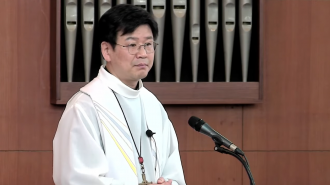
구분 : 폴 니터 교수 강연 'Without Buddha I Could Not Be a Christian'(부처님 없이 나는 그리스도인이 될 수 없었다)
일시 : 2011년 1월 1일
장소 : 동화사
자료 출처 : 폴 니터 교수 한국 초청측
I feel both deeply grateful and deeply honored. So I thank and bow to Zen Master Jinje sunim and Donghwa-sa sindonim-deul for this opportunity to be with you. It is an opportunity to form and foster friendship. And it is an opportunity to talk to each other, learn from each other, and work with each other in trying to respond to the suffering of all sentient beings and of our planet earth.
오늘 이 자리에 서게 된 것이 너무 감사하고, 또한 큰 영광입니다. 이런 기회를 주신 진제 스님과 동화사 신도님들께 머리 숙여 감사드립니다. 오늘 이 자리는 우리들 사이의 우애를 형성하고 깊게 할 기회입니다. 또한 인류와 지구의 모든 중생의 고통에 응답하기 위해 서로 대화하고, 서로에게서 배우고, 함께 일하기 위한 기회입니다.
That’s what I would like to talk about with you today: the opportunity and the urgency of interreligious conversation and collaboration. Such interreligious dialogue, in our contemporary globally connected, but also globally threatened, world is both an opportunity and an urgency. My focus will be the dialogue between Buddhism and Christianity.
오늘 여러분과 나누고 싶은 이야기는 종교간 대화와 협력의 기회와 긴급함에 대한 것입니다. 지구적으로 연결되어 있고, 지구적으로 위기에 처해 있는 오늘날의 세계에서 종교인들 사이의 대화는 우리 모두에게 기회이자 긴급한 과제입니다. 그런 큰 맥락에서 제가 말씀드리려는 것은 불교와 그리스도교의 대화입니다.
This opportunity and this urgency of interreligious dialogue confront us on two different but deeply related levels: the geopolitical level and the personal level.
우리가 직면하고 있는 종교간 대화의 기회와 긴급성은 두 가지 다르면서도 깊어 연결되어 있는 차원을 가지고 있습니다. 지정학적 차원과 개인적 차원입니다.
I. THE GEOPOLITICAL URGENCY OF INTERRELIGIOUS DIALOGUE
종교대화의 지정학적 긴급성
A. Death or Dialogue
죽음 아니면 대화
Many years ago, I co-authored a book titled: Death or Dialogue. The title sounded a bit sensational then, but not as much today. Perhaps today we could rephrase the title: The Clash of Civilizations or the Cooperation of Civilizations. Are our nations and our civilizations destined to clash and compete with each other until one of them proves its superiority, as Samuel Huntington seems to suggest?
여러해 전, 다른 필자들과 함께 “죽음 아니면 대화”라는 책을 썼습니다. 그 제목은 당시에는 지금보다 다소 선정적인 것이었습니다. 오늘날에 맞게 제목을 다시 짓는다면, 아마도 “문명의 충돌 혹은 문명의 협력”이 될 수 있을 겁니다. 우리가 직면해야 할 질문은, 새뮤얼 헌틴턴이 주장하듯, 나라들과 문명들이 그들 중 하나의 우월성을 입증할 때까지 서로 충돌하고 경쟁하도록 운명지워져 있는가,
Or are our nations – and the ethnic groups within our nations – called to collaborate and cooperate? Are human beings more disposed to conflict or to cooperation?
아니면, 나라들이, 그리고 그 나라들 안의 민족들이 서로 협력하고 협동할 것을 요구받고 있는가, 입니다. 과연 우리 인간은 갈등에 더 이끌리는 존재일까요, 아니면 협력에 더 이끌리는 존재일까요?
B. The Role of Religions
종교의 역할
I do believe that the religious communities of the world have a vital role to play in how that question is answered.
저는 세계의 종교 공동체들이 이 질문의 답을 찾는 데 있어 중요한 역할을 하고 있다고 믿습니다.
Hans Küng’s dictum has become almost a cliché, but it is a cliché that we must keep repeating and take seriously: There will be no peace among nations without peace among religions. And there will be no peace among religions without greater dialogue among religions.
지구윤리의 초안자인 독일의 신학자 한스 큉은 “종교들 사이의 평화 없이 나라들 사이의 평화는 없다. 그리고 종교들 사이의 대화 없이 종교들 사이의 평화는 없다”고 말한 바 있습니다. 이제는 너무 자주 들어 진부한 말처럼 들리기도 하지만, 큉의 주장은 여전히 거듭해서 진지하게 받아들여야만 하는 진실입니다.
C. The reality of Korea
한국의 현실
I believe that recent events on the Korean peninsula bear witness to how much we must take Küng’s admonition seriously.
저는 최근 한반도에서 일어나고 있는 일련의 사태들은 우리가 큉의 충고를 심각하게 받아들여여만 한다는 것을 보여주고 있다고 믿습니다.
On the same day I was writing these words, I read this headline in the New York Times: Amid Tension, South Korea Holds Nation wide Air-Raid Drill, for the first time since 1975. These drills, of course, resulted from the fears stirred by the North Korean artillery attack on Yeonpyeong Island on Nov. 23. (http://nyti.ms/fvE2cx ) The volcano of tensions between North and South Korea continues to rumble and threaten to erupt.
이 강연의 원고를 쓰고 있을 때, [뉴욕타임즈] 기사를 읽었습니다. 군사적 긴장 속에, 1975년 이후 최초로 남한에서 방공훈련을 했다는 소식이었습니다. 물론 이 훈련은 지난 해 11월 23일, 북한의 연평도 포격이 야기한 혼란과 두려움의 결과였습니다. 남-북 긴장의 분화구는 언제라도 분출할 듯 끓어 오르고 있습니다.
Then there are the recent intrusions of Korean Christians into Buddhist temples in Seoul and Daegu, especially here in Dong-hwa-sah, in which they denounced the validity of Buddhism and proclaimed the coming victory of Christianity. More recently, there have been the fire-damages inflicted upon Bumuh-sah in Pusan, presumably by an anti-Buddhist fanatic.
한편, 최근에는, 일부 그리스도인들이 서울 봉은사와 특히 여기 대구 동화사에 들어와 불교를 폄하하고 그리스도교의 승리를 선언한, 소위 ‘땅밟기’가 있었다는 소식을 들었습니다. 그리고 불교를 반대하는 광신도에 의한 것으로 추정되는 범어사의 천왕문 방화 사건의 불행한 소식도 들었습니다.
These clashes, political and religious, are very different. And yet I venture to say that they are not unrelated. To overcome the causes of interreligious clashes would be a major step in overcoming the causes of political conflict.
Or more positively, the more Korean Christians and Buddhists can tap into and discover the resources in their own practices that call them to embrace each other, the more they will be both examples and agents for making such an embrace of North and South possible.
이러한 충돌에서, 남-북 충돌은 정치적인 것이고 불교-그리스도교 충돌은 종교적인 것이기에 매우 다른 것이 사실입니다. 하지만, 감히 말씀드리건데, 남-북의 군사적 충돌과 종교적 충돌은 무관한 게 아닙니다. 종교적 충돌의 원인들을 극복하는 것은 정치적 갈등의 원인들을 극복하기 위한 중요한 한 단계가 될 것입니다.
더 긍정적인 관점에서 말씀드린다면, 한국의 불자와 그리스도인들이 서로를 포용하게 하는 원천을 각자의 전통 안에서 더 발견하고 활용할 수록, 불자와 그리스도인들은 남한과 북한이 서로를 포용할 수 있게 하는 본보기이자 주체가 될 것입니다.
Naturally, since the most recent disturbances have been perpetrated by Christians, there is a particular urgency within the Korean Christian community to confront what I believe are the theological causes for such arrogance and violence.
These causes are rooted in what I, and many other Christians, believe are the false notions that Christianity is the only valid religion for all of humanity. Such claims of superiority and exclusivity contradict the teachings of Jesus.
What has happened recently in Korea is another example of how claims of religious exclusivity lead to acts of religious violence.
물론, 최근의 소동이 그리스도인들에 의해 저질러진 것이므로, 그리스도교 공동체들은 그러한 오만과 폭력의 신학적 원인들을 직면해야 할 긴급성을 더 많이 가지고 있습니다.
이 원인들은 근본적으로 그리스도교만이 모든 인류에게 유일하게 유효한 종교라는 잘못된 관념에 뿌리를 두고 있습니다. 그런 우월성과 배타성 주장은 예수님의 가르침에 어긋나는 것입니다.
최근 한국에서 일어난 ‘땅밟기’와 같은 사건은 종교적 배타성이 어떻게 종교적 폭력으로 이어지는 지를 보여주는 한 사례입니다.
D. To properly explore the connections between religion and violence, and religion and peace, would require another lecture. Today, I want to concentrate on why Buddhist-Christian dialogue is important, even urgent, on the personal level.
종교와 폭력, 종교와 평화의 연결고리를 정확히 탐구하려면 또 하나의 강연이 필요할 것입니다. 대신, 오늘 저는 왜 불교-그리스도교 대화가 중요하고 긴급한지를 저의 체험에 기초해서 말씀드리는 데 집중하고자 합니다.
Such Buddhist-Christian dialogue on the personal level is the topic of my book, soon to be translated into Korean, WithoutBuddhaICouldNotBeaChristian.
It traces my own dialogical odyssey with Buddhism which I would like to share and discuss with you today.
저의 체험적 차원에서의 불교-그리스도교 대화는 제가 최근에 쓴 책 [부처님 없이 나는 그리스도인이 될 수 없었다]의 주제입니다. 이 책은 곧 한국어로도 번역될 것으로 알고 있습니다.
[부처님 없이 나는 그리스도인이 될 수 없었다]는 저의 불교로의 대화적 여행을 되짚어 성찰한 책입니다. 그 내용들의 일부를 오늘 여러분과 함께 나누고 싶습니다.
II. THE PERSONAL URGENCY OF INTERRELIGIOUS DIALOGUE
종교대화의 개인적 중요성
A. The rise of “comparative theology” and “multiple practice” in the United States and Europe
미국과 유럽에서의 “비교신학”과 “여러 전통을 실천하기”의 발생
Today in the United States there is a growing awareness, on both the academic and the popular levels, that in order to be religious one must be interreligious. The challenge is “to be religious interreligiously.”
오늘날 미국에서는, 학문적, 대중적 차원 모두에서, 우리가 종교적이기 위해서는 종교대화가 필수적이라는 인식이 늘어나고 있습니다. 도전이 되는 것은 “종교대화적으로 종교적이기” to be religious interreligiously입니다.
On the academic level, this is called comparativetheology–the growing conviction that in order to truly understand one’s own tradition, one must be in conversation with other traditions.
Or in Buddhist terms: the religions of the world are interconnected, and they must deepen their awareness of this interconnection.
학문적 차원에서 이는 ‘비교신학’ comparative theology이라고 불립니다. 이 신학 운동은 자신의 종교 전통을 진정으로 이해하기 위해서는 다른 전통들과 대화해야만 한다는 확신에 기초합니다.
불교적으로 말하면, 세계의 모든 종교들은 상호 연결되어 있으므로, 종교들은 이 연결의 실상에 대한 인식을 깊게 해야만 한다는 것입니다.
On the popular level, there is the growing phenomenon in the United States of “dual belonging” – or dual – even multiple – religious practice. People are discovering that they can, and sometimes must, draw nourishment from more than one religious tradition and practice.
또한 미국에서는 대중적 차원에서 “두 전통에 속하거나” 혹은 “두 전통,” 심지어 “여러 전통을 실천”하는 현상도 늘어나고 있습니다. 사람들은 하나 이상의 종교전통들로부터 영적 자양분을 가져올 수 있고, 때로는 그래야만 한다는 것을 발견해가고 있습니다.
Of course, what we in the West are discovering about “dual religious belonging” has long been a reality in most of the countries of Asia. This is nothing new for Asians who in their daily lives have naturally and normally combined beliefs and practices from Buddhism, Taoism, Confucianism, and indigenous traditions.
물론, 우리 서양 사람들이 현재 발견해가고 있는 “두 전통에 속하기”는 대부분의 아시아에서 이미 오랫동안 체험되어 온 현실입니다. 아시아인들은 일상 생활에서 불교, 도교, 유교, 토착종교의 신앙과 실천을 자연스럽게 조화시켜내는 체험을 가지고 있습니다.
But in the West, such double belonging does not come naturally as it does for many Asians. So we are studying it more consciously –and more academically and theologically. In a sense we are trying to make explicit the value of double belonging and the religious justification for it.
Here, I believe, Korean Christians – especially those who demonstrate in front of Buddhist temples – may have something to learn from this Western conversation.
하지만 아시아에서와는 달리 서양에서는 그런 두 전통에 속하기가 자연스럽게 이루어진 것이 아닙니다. 때문에, 우리 서양인들은 두 전통에 속하기를 더 의식적으로, 즉, 더 학문적, 신학적으로 연구하고 있습니다. 어떤 의미에서 우리 서양인들은 두 전통에 속하기의 가치와 그것의 종교적 정당화를 더 명백히 하고 있는 셈입니다.
바로 이 점에서 저는 한국의 그리스도인들, 특히 불교 사찰을 침입해 문제를 일으킨 그리스도인들은 서구에서 이루어지고 있는 불교-그리스도교 대화의 노력으로부터 배워야 할 것이 있다고 봅니다.
B. My personal journey toward interreligious dialogue and double-belonging
1. My own journey toward realizing the importance of dialogue among religions began some 60 years ago when as a young boy I decided that I wanted to become a Roman Catholic missionary.
종교간의 대화의 중요성을 자각하며 시작된 저의 영적 여행은 약 60여년 전, 어린 소년이었던 제가 가톨릭 선교사가 되려고 결심했던 때부터 시작했습니다.
I joined the Society of the Divine Word and wanted to become a missionary out of love for persons of other religions. But if I loved them, I felt I had to convert them, for I firmly believed that without Jesus they would be lost.
Every day, three times a day, we said the prayer: “May the darkness of sin and the night of paganism vanish before the light of the Word and the Spirit of grace.” Outside of the light and grace of Christianity, there was only sin and darkness.
저는 Society of the Divine Word(신언회)에 가입했습니다. 그리고 다른 종교들을 믿는 사람들에 대한 사랑으로, 선교사가 되고자 했습니다. 당시 저는 제가 그들을 사랑한다면 그들을 개종시켜야만 한다고 느꼈습니다. 왜냐하면 예수님 없이 그들은 구원받을 수 없다고 확고히 믿었기 때문입니다.
매일, 하루 세번, 우리는 “죄의 어둠과 이교도의 밤이 말씀과 은혜의 성령의 빛 앞에서 사라지게 하소서”라고 기도했습니다. 우리는 그리스도교의 빛과 은혜 바깥에는 오직 죄와 어둠만이 있다고 믿었습니다.
But in order to convert Buddhists and Muslims and Hindus, I had to know something about them. So I started to study these religions. And this is where my problems – my happy problems I should call them – began.
하지만 불교, 무슬림, 그리고 힌두들을 개종시키기 위해서 저는 그들에 대해 뭐든 알아야만 했습니다. 그래서 이들 종교들을 연구하기 시작했습니다. 바로 거기에서 제 문제들이 시작되었습니다. 물론, 결과적으로 볼 때, 그 문제들은 “행복한 문제들”이었습니다.
The more I learned about other religions, and especially the more opportunity I had to meet practicing Buddhists and Hindus and Muslims, the more I began to question my belief that they contained only sin and darkness.
I started to wonder whether truth and grace and light can be found in many religions, not just in my own.
제가 다른 종교들에 대해 더 많이 배우면 배울수록, 특히 불자, 힌두, 무슬림들을 만나는 기회가 많아지면 많아질수록, 저는 이웃종교인들이 오직 죄와 어둠만을 가지고 있다는 믿음에 대해 의문을 갖게 되기 시작했습니다.
진리, 은혜, 빛이 다른 여러 종교들에서도 발견될 수 있는 것인지, 아니면 오직 제가 믿는 그리스도교에만 있는 것인지 의문을 갖기 시작한 것입니다.
2. And just at the point where I had so many unsettling questions about other religions, I was sent to Rome, Italy to begin my four years of theological studies prior to being ordained a priest.
그런데, 다른 종교들과 관련하여 마음의 동요를 일으키는 물음들을 갖고 있을 때, 사제로 서품받기 전 4년 동안 신학 공부를 하기 위해 로마로 가게 되었습니다.
I arrived in Rome in September 1962, just two weeks before some 2000 Catholic bishops from all over the world marched into St. Peter’s Basilica behind Pope John XXIII to begin the Second Vatican Council.
저는 1962년 9월 로마에 도착했습니다. 이 때가 교황 요한 23세와 2천여명의 세계 가톨릭 주교들이 역사적인 제2차 바티칸 공의회를 시작하기 위해 성 베드로 성당으로 행진해 들어가던 때로부터 2주 전이었습니다.
As many of you may know, this Council brought about tremendous changes in the Catholic Church. Among these changes was a new attitude toward other religions. The Council declared that there is much truth and goodness to be found in all religions, that God is working in other religions, and that Christians are called to dialogue and learn from these religions.
Here I must say that the Korean Christians who have demonstrated before and denigrated Buddhist temples do not believe in the same God that many other Christians believe in – the God that the Vatican Council tells cannot be contained in any one religion.
여러분도 아시다시피, 제2차 바티칸 공의회는 가톨릭 교회에 엄청난 변화를 가져왔습니다. 이 변화들 중에 다른 종교들에 대한 태도 변화도 포함되어 있었습니다. 공의회는 다른 종교들 안에 진리와 선이 있다고 선언했습니다. 또한, 하느님은 다른 종교 안에서도 역사하고 있으며, 그리스도인들은 이들 종교와 대화하고 배우도록 부름 받았다고 선언했습니다.
여기에서 저는 불교 사찰에 들어가 문제를 일으킨 한국 그리스도인들이 믿는 하느님은 다른 그리스도인들이 믿는 하느님과 동일한 하느님이 아니라고 말씀드리고 싶습니다. 바티칸 공의회가 고백하는 하느님은 어느 한 종교 안에 제한될 수 있는 하느님이 아닙니다.
3. So with the encouragement of the Second Vatican Council, I went on to write my doctoral dissertation on how Christians can better dialogue with persons of other religions.
이렇게, 제2차 바티칸 공의회의 자극과 함께, 저는 어떻게 그리스도인들이 다른 종교인들과 더 깊이 대화할 수 있는 가에 대한 박사논문을 쓰게 되었습니다.
And when I finished my doctoral studies in Germany and returned to the United States in 1972 to start my teaching career, I began to study other religions even more deeply. Not only that, I began to dialogue with practicing Buddhists, and Muslims and Hindus and Native Americans. And more and more, I found that I was learning so much and being enriched through these studies.
독일에서 박사과정을 마치고 1972년 미국으로 돌아와 교수 생활을 시작하게 되었을 때, 다른 종교들을 더 깊이 연구하기 시작했습니다. 그뿐 아니라, 불자, 무슬림, 힌두, 미국 원주민들과 대화하기 시작했습니다. 그럴수록 다른 종교로부터 배울 게 너무 많고, 그 배움을 통해 제 신앙과 신학이 풍요로워지는 것을 깨달았습니다.
4. But although I was dialoguing with many religions, I felt myself being drawn, both intellectually and spiritually, to Buddhism. And I began to practice Zen meditation daily.
그렇게 여러 종교들과 대화하고 있었지만, 저는 지적, 영적으로 불교에 더 많이 끌리고 있는 것을 느꼈습니다. 그래서 매일 참선 수행을 하기 시작했습니다.
Over these many years, I have come to realize that Buddhism has gradually become not only a subject that I study but a subject or practice that has profoundly affected me and the way I understand myself and my own Christian practice.
이렇게 여러해를 보내면서, 저는 점차 불교가 제 학문의 한 대상일 뿐만 아니라 저 자신과 저의 그리스도교 신앙을 이해하는 방식에 지대한 영향을 미치는 하나의 수행이 되어간다는 것을 깨닫기 시작했습니다.
I realized that more and more I was, as it were, listening to Jesus with Buddha’s ears. Or to change this metaphor, I was viewing and looking into my own Christian beliefs with Buddhist glasses. And my Buddhist glasses enabled me to see things in Jesus and in Christian belief that I could have never seen without these glasses.
저는 점점 더 부처님의 귀로 예수님의 말씀을 듣고 있는 자신을 깨달았습니다. 다른 비유를 들어 말씀드린다면, 저는 불교의 안경을 쓰고 저의 그리스도교 신앙을 바라보고 있었습니다. 제가 쓴 불교의 안경은 전에는 그 안경 없이는 결코 볼 수 없었을 예수님과 기독교 신앙의 내용들을 볼 수 있게 해 주었습니다.
I had become, without intending it or realizing it, a Buddhist Christian.
의도하지 않았고, 그것을 알아차리지도 못한채, 저는 불자-그리스도인이 되었습니다.
5. That’s why I wrote this book – to lay out for myself and for others how Buddhism had informed my Christian beliefs. In particular, I wanted to see if what I was experiencing and doing as a “Buddhist Christian” made sense for, and could be accepted by, my Christian community.
I also wanted to hear from my Buddhist friends what they thought of the way Buddhism was helping me be a Christian. – And I look forward to hearing what you think!
제가 [부처님 없이 그리스도인이 될 수 없었다]를 쓰게 된 이유는, 어떻게 불교가 제 그리스도교 신앙을 새롭게 알게 했는지 설명하기 위함이었습니다. 특히 제가 불자-그리스도인으로서 체험하고 실천해온 것이 그리스도교 공동체 안에서도 받아들여질 수 있는 지 알고 싶었습니다.
또한 저는 불교가 저를 그리스도인이도록 도와주는 것에 대해 제 불자 친구들이 어떻게 생각하는 지 듣고 싶었습니다. 이번 여행 중에 저의 불자-그리스도인 됨에 대한 불자 여러분의 의견을 듣고 싶습니다.
C. The book embodies my “passing over and passing back”
이 책은 불교로 “넘어감”과 그리스도교로 “돌아옴”을 구체화합니다.
In each chapter I try to show how Buddhism has affected my understanding of the foundational teachings of Christianity – about God, about Jesus, about life after death, about prayer, and especially about social action. My goal is to show how Buddhism has enabled me deal with some of the questions and difficulties I have with many Christian beliefs.
이 책의 각 장에서 저는 어떻게 불교가 그리스도교의 근원적 가르침에 대한 저의 이해에 영향을 미쳤는지를 보여주고자 했습니다. 그것은 하느님, 예수님, 사후의 삶, 기도, 그리고 특히 사회운동에 대한 것들입니다. 제 목표는 제가 의구심을 갖거나 받아들이기 어려워하는 그리스도교 신앙의 문제들을 불교가 어떻게 다룰 수 있게 해주었는지를 보여주는 것이었습니다.
My goal/hope is not to throw out Christian beliefs and replace them with Buddhist beliefs. Rather, it is to try to reinterpret, review, and re-appropriate my Christian beliefs and experience with the help of Buddha.
제 목표와 희망은 그리스도교 신앙을 버리고 불교 신앙을 갖는 것이 아닙니다. 그보다는, 부처님의 도움으로 그리스도인으로서의 신앙과 체험을 재해석하고, 재음미하고, 재승인하려고 합니다.
To give you an idea of what I’m attempting to do in this book, let me try to summarize one of the chapters – the one titled “Jesus the Christ and Gautama the Buddha.”
이 책에서 제가 시도하고 있는 것이 어떤 것인지 여러 분이 알 수 있도록, 오늘 이 자리에서는, 제 책의 한 장인 “예수 그리스도와 고타마 붓다”에 대해 말씀드리고자 합니다.
III. Jesus and Buddha.
예수와 부처
Buddhism has helped me understand more coherently and I believe more engagingly two of the central teachings of Christianity: that Jesus is the “Son of God” and that Jesus is “Savior of the world.”
불교는 저로 하여금 그리스도교의 중요한 두 가르침을 더 조리있고 의미있게 이해할 수 있도록 도와주었습니다. 그것은 예수님은 “하느님의 아들”이라는 가르침과 예수님은 “구세주”라는 가르침입니다.
A. Jesus Son of God: His divine nature = his enlightened nature?
1. What do Christians really mean when they say that Jesus is “the Son of God” or that Jesus is divine?
그리스도인들이 예수님은 하느님의 아들이고 예수님은 신적인 분이라고 말할 때, 그들이 정말 의미하는 것은 무엇일까요?
To take these statements literally seems to be an offense to what Christians believe is the nature of God. God is beyond reproduction and does not have offspring as humans do. Also, to insist that Jesus is God suggests that the immensity of the Divine can be contained in one finite human being.
그 신앙적, 신학적 진술들을 문자적으로 취하는 것은 하느님의 본성에 대해 그리스도인들이 믿는 것을 부정하는 것입니다. 하느님은 인간처럼 자식을 낳는 그런 분이 아닙니다. 또한 예수님은 신적인 분, 하느님이라는 주장도 신성의 무한광대함이 유한한 인간존재 안에 담길 수 있다고 주장하는 게 되고 맙니다.
Questions grow even more uncomfortable when scholars of the New Testament tell us that Jesus never really called himself God and that the passages in the New Testament where he seems to do so were later interpretations of the early community of Jesus-followers.
The first Christians called Jesus “Son of God” not because Jesus told them to but because of the way they experienced him both before and after his death.
신약학자들은 예수님은 결코 당신을 하느님이라고 자칭하지 않았다고 주장합니다. 그리고 예수님이 당신을 마치 하느님인 것처럼 말씀하시는 성서 본문들도 예수님께서 직접 하신 말씀이 아니라, 예수님을 따르던 초기 그리스도교 공동체의 해석이었을 뿐이라고 주장합니다. 이런 신약학자들의 연구 결과는 우리로 하여금 예수님은 신이라는 주장에 대해 더 큰 의구심을 갖게 합니다.
초기 그리스도인들은 예수가 그들에게 그렇게 말씀했기 때문에 예수님을 하느님의 아들이라고 부른 게 아닙니다. 그보다는 예수님의 죽음 이전과 이후에 그들이 예수님을 체험한 방식 때문에 그렇게 불렀습니다.
So what were they trying to say when they called him divine? – Here is where, I have found, Buddhism can be of help.
그렇다면, 그들이 예수님을 신적인 분이라고 고백했을 때, 그들이 말하고자 했던 것은 무엇일까요? 저는 바로 이 지점에서 불교가 도움을 줄 수 있다는 것을 발견했습니다.
2. Buddhism reminds us Christians that our central and self-identifying claim that Jesus is “the Son of God” is a “finger pointing to the moon.” Like all religious language, it is trying to say something that will always be beyond words.
불교는 우리 그리스도인들에게 예수님은 “하느님의 아들”이라고 하는 우리의 고백이 결국 “달을 가리키는 손가락”일 뿐이라는 사실을 상기시켜 줍니다. 다른 모든 종교언어와 마찬가지로, 그 말 역시 언어로 표현할 수 없는 것을 말한 것일 뿐입니다.
3. To get at, and feel, that deeper meaning, Buddhism has helped me to appreciate and repossess what is called Spirit Christology. This is an understanding of Jesus that is present in the New Testament and within our tradition but that has to a great extent been neglected.
예수님은 “하느님의 아들”이라는 말의 더 깊은 의미를 알고, 느끼도록, 불교는 저에게 “영 그리스도론” Spirit Christology이라는 것을 이해하고 회복하도록 도와주었습니다. 이는 사실 신약성서와 그리스도교 전통에 이미 있어왔던 예수님에 대한 한 이해이지만 크게 무시되어왔습니다.
Jesus is divine because of the way he was fully transparent to the Spirit that was part and parcel of his very human nature.
We can say that Jesus “woke up” to the Spirit that was part of his very nature. He was enlightened in and through the Spirit. He became aware of what he really was: a manifestation or what Christians call an “incarnation” of the Spirit, of the Divine that pervades and moves within all human beings and all reality.
예수님이 신적인 존재이셨던 것은 그가 인간으로서의 그의 본성의 한 부분인 성령과 완전히 하나 되었기 때문입니다. 마치 그의 존재가 투명해서 성령이 그를 그대로 투과해서 보여지듯이 말입니다.
예수님은 그의 본성의 부분인 성령을 향해 “깨어났다”고 할 수 있습니다. 그는 성령 안에서, 성령을 통해 깨달음을 얻은 것입니다. 불교적으로 말한다면, 그의 진아, 참 나를 깨달은 것입니다. 그것이 바로 그리스도인들이 영의, 신성의 현현 혹은 성육신 incarnation이라고 하는 것입니다. 이 영, 신성은 모든 인간, 모든 존재 안에 스며들어 있고 그 안에서 움직입니다.
To say that Jesus woke up to and became an utterly transparent manifestation or incarnation of the Spirit of God is a way of understanding what we mean when we say he is divine.
예수님이 하느님의 영으로 깨어나고, 하느님의 영의 전적으로 투명한 현현 혹은 육화가 되었다고 말하는 것은, 예수님이 하느님이라고 말할 때 의미하는 것이 무엇인지를 알 수 있게 하는 하나의 방법입니다.
B. Jesus Savior of the world: To be saved by Jesus is to share in his experience of enlightenment and continue his mission.
한편, 그리스도인들은 예수님은 세상의 구원자라고 합니다. 예수님에 의해 구원받는다는 것은 그의 깨달음 체험을 나누고 그의 사명을 계속하는 것입니다.
1. Many Christians also struggle with what it means to say that Jesus is Savior and that he is Savior of the entire world.
또한, 많은 그리스도인들은 예수님이 구원자라는, 전 세계의 구원자라고 말하는 것이 무슨 의미인지에 대해 씨름하고 있습니다.
For many Christians, to say that Jesus saves us by dying on the cross in order to satisfy God’s anger or God’s demand for justice has become not only unintelligible; it has become repulsive.
많은 그리스도인들에게, 예수님이 하느님의 분노 혹은 정의의 요구를 충족시켜드리기 위해 십자가에 돌아가심으로써 우리를 구원했다고 말하는 것은 이해될 수 없을 뿐만 아니라 혐오스러운 이야기로 받아들여지고 있습니다.
Furthermore, to say that Jesus is the savior of the world seems to imply that in order to be saved and loved by God you have to know and accept Jesus. But this is a contradiction to the basic Christian belief that God loves all people and wants them to enjoy the peace and happiness that Christians call “salvation.” If God offers God’s love only through Jesus, it certainly seems that God does not love everyone.
뿐만 아니라, 예수님은 세상의 유일한 구원자라고 말하는 것은 하느님에 의해 구원받고 사랑받기 위해서는 예수님을 알고 받아들여야만 한다는 것을 의미하는 것처럼 보입니다. 하지만 이는 하느님은 모든 사람들을 사랑하시며, 그들이 그리스도인들이 구원이라고 부르는 평화와 행복을 향유하기를 원하신다는 그리스도교의 기본적 신앙과 모순됩니다. 만약 하느님이 당신의 사랑을 오직 예수님을 통해서만 주신다면, 그것은 분명 하느님은 모든 사람을 사랑하지 않고 계신 것처럼 보입니다.
Here, too, I believe that Buddhism can offer Christians some help.
바로 여기에서, 저는 불교가 그리스도인들을 도울 수 있다고 봅니다.
2. Mahayana Buddhism holds that Buddha’s power to enlighten others is identical with his power to teach and that he transforms lives by embodying the transformation that he calls others to realize in themselves. This suggests to Christians that Jesus’ power to save is found in the way he teaches, or in more Christian terms, in the way he reveals the truth and power of God.
대승불교는 중생이 깨달음을 얻게 하는 부처님의 능력을 교화력이라고 봅니다. 부처님은 사람들 각자가 깨달아야 한다고 가르치시고, 그 깨달음을 몸소 구현하심으로서 사람들을 변화시키십니다. 이는 그리스도인들로 하여금 예수님의 구원하시는 능력은 그분의 가르침에, 그리스도교적으로 말하면, 예수님이 하느님의 진리와 능력을 계시하는 방식에 있음을 알게 해 줍니다.
Jesus shows the way to God by embodying, by incarnating an at-onement with God that is the potential of all humans.
예수님은 모든 인간안에 잠재하는 하느님을 체현하고, 대속 atonement가 아니라 신과 하나 됨 at-onement를 구현함으로써 하느님에 이르는 길을 보여줍니다.
As the Church Father Athanasius tell us: In Jesus God “becomes” human so that humans can become divine.
교부 아타나시우스가 말했듯이, 인간도 신이 될 수 있도록 하기 위해 예수님 안에서 하느님은 인간이 되셨습니다.
This means for Christians that Jesus saves not by fixing a rupture between God and humanity but by revealing that there is no such rupture to begin with. Or in my traditional Catholic terms, Jesus is the sacrament or symbol of God’s presence in all of creation – a presence and power that we have forgotten or are afraid to trust.
이것이 그리스도인들에게 말해주는 것은, 예수님은 하느님과 인간 사이의 단절을 고침으로써 구원하시는 게 아니라, 그런 단절이 원래 없다는 근원적 사실을 드러냄으로써 구원하신다는 것입니다. 좀 더 전통적인 가톨릭 개념으로 말한다면, 예수님은 만물 안에 현존하는 하느님의 성사 혹은 상징입니다. 이 만물 안의 하느님의 현현과 힘은 우리 그리스도인들이 잊어버린, 혹은 믿기를 두려워하는 것입니다.
3. To be saved, therefore, is to wake up to the reality, as St. Paul describes it, that it is no longer I who live but Christ and Christ’s Spirit who is doing the living in and through and as me. (Gal. 2:20)
As Buddhists are enlightened by discovering their Buddha-nature, Christians are saved by discovering their Christ-nature.
따라서, 구원받는다는 것은, 바울이 묘사하듯이, 더 이상 내가 사는 것이 아니고, 내 안에서, 나를 통해, 나로서 작용하는 그리스도와 그리스도의 영이 사는 것을 깨닫는 것입니다.
불자들이 불성 Buddha-nature을 발견함으로써 깨달음을 얻듯이, 그리스도인들은 그리스도성 Christ-nature을 발견함으로써 구원을 받는 것입니다.
4. Such an understanding of Jesus as teacher, as someone who reveals to us the way and the truth and the life of God is open to the possibility that there may be others who teach and embody other ways, other truths by which we may experience the mystery of what we Christians call God.
Jesus understood as God’s universal Sacrament or symbol of salvation is inherently open to the possibility that what we call Spirit may be found in other universal sacraments, in other embodiments and teachings.
All of these teachers, all of these embodiments of truth and salvation and enlightenment could be understood as different fingers pointing to the same moon.
This means that we can learn more of the moon but studying and learning from other “fingers.”
이처럼 예수님을 교사로서 이해하는 것, 하느님의 길, 진리, 생명을 드러내신 분으로서 이해하는 것은, 달, 즉 그리스도인들이 하느님이라고 부르는 신비를 체험하게 하는 다른 길들, 다른 진리들을 가르치고 구현하는 다른 이들이 있다는 가능성을 향해 우리의 마음을 열게 합니다.
예수님을 하느님의 보편적 성사 혹은 구원의 상징으로 이해하는 것은 예수님 외의 다른 보편적 성사들 안에서, 다른 구현과 가르침들 안에서 우리가 성령이라고 부르는 것을 발견할 가능성을 열어줍니다.
이 모든 교사 혹은 스승들, 진리와 구원, 그리고 깨달음을 구현하시는 분들은 같은 달을 가리키는 다른 손가락들로 이해할 수 있습니다.
이것이 의미하는 것은, 다른 손가락들을 공부하고 배움으로써 달에 대해 더 많이 배울 수 있다는 것입니다.
In this understanding of how Jesus saves, Jesus is the Way that is open to other Ways.
예수님이 어떻게 구원하는지에 대한 이러한 이해는, 예수님은 다른 길들을 부정하는 유일무이한 길이 아니라 다른 길들을 향해 열린 하나의 길이라는 것을 알게 해 줍니다.
IV. WHAT DUAL BELONGING IS FOR ME
A. Promiscuity or Hybridity?
When I taught this book, still in its manuscript form, for the first time at Union Theological Seminary, at the end of the course, one of the students stunned me with this question: “Is multiple belonging really a kind of religious promiscuity? In my devotion to Buddha, am I being unfaithful to Jesus?
이 책의 초고를 가지고 유니언 신학교 학생들과 한 학기 동안 세미나를 한 적이 있습니다. 그 학기 말에 한 학생이 질문했습니다. “여러 전통에 속하는 것은 일종의 종교적 문란 아닌가요?” 과연, 부처님에 대한 저의 귀의 때문에 저는 예수님에게 신실하지 않게 되는 걸까요?
I don’t think so. I do believe that spiritual multiple belonging is not a matter of promiscuity, but an expression of the hybridity that has always marked human or national identity, and that is marking it ever more urgently in our contemporary context.
저는 그렇게 생각하지 않습니다. 영적으로 여러 전통에 속하기는 종교적 문란함의 문제가 아니라 우리의 종교적 혼성성, 즉 하아브리디티의 문제입니다. 우리 인간은 원래 혼성적 존재로, 하이브리드로 존재합니다. 요즘 같은 현대적 상황에서는 더욱 더 그렇습니다.
No one has only one, unchanging identity. We are all hybrids, we all have more than one identity – or in Buddhist terms, no unchanging identity. We are all “anattas.” We are all changing through interacting with new experiences, new identities. We may have a primary identity, but it is always in process.
그 누구도 하나의 유일하고 불변하는 정체성을 갖고 있지 않습니다. 우리 모두는 하이브리드입니다. 우리는 하나 이상의 정체성을 가지고 있습니다. 불교적으로 말하자면, 변하지 않는 정체성, 자아는 없습니다. 우리 모두는 무아적 존재입니다. 우리는 새로운 경험, 새로운 정체성과 상호작용을 통해 변화합니다. 물론 우리는 우리의 중심적인 정체성을 가질 수 있습니다. 하지만 그것 역시 언제나 변화하는 과정 속에 있습니다.
B. So, in religious double belonging, there is usually a primary religious identity. Usually, it is the one determined by the causes and conditions of where we were born.
따라서 종교적으로 두 전통에 속할 때 보통 중심적 종교적 정체성이 있게 됩니다. 대개 그것은 우리가 태어나는 인연에 의해 결정됩니다.
For me, Jesus and the Gospel stand at the center of my spiritual life, similar to the way my wife Cathy stands at the center of my personal life.
제게 예수님과 복음은 제 영적 삶의 중심입니다. 제 아내 캐티가 언제나 제 개인적 삶의 중심을 차지하고 있는 것과 같습니다.
And yet, at this point in my life, I cannot imagine living, practicing, or making sense of my commitment to Christ without a relationship with Buddha (just as other friendships nourish my relationship to my wife).
하지만, 제 인생의 현 지점에서, 저는 부처님과의 관계 없이는 그리스도에 대한 저의 헌신을 살아내고, 실천하고, 의미있게 하는 것을 상상할 수 없습니다. 다른 사람들과의 우정이 제 아내와의 관계를 더 깊게 하는 것과 같습니다.
C. I am nurtured by both. Christ is my primary nourishment. And yet – here I get to the heart of double belonging or spiritual hybridity – I need other nourishment. I need Buddha.
저는 부처님과 예수님 두 분에 의해 영적으로 양육되어왔습니다. 분명히 그리스도는 저를 영적으로 양육해주신 분입니다. 하지만 저는 다른 영적 양육자가 필요합니다. 부처님이 필요합니다. 바로 여기에서 저는 불교와 그리스도교 두 전통에 속하는 것을, 혹은 영적 하이브리디티의 삶을 살게 됩니다.
And so, I begin my daily meditation with the prayer: “I go for refuge to the Christ, to the Gospel, to the Church. I go for refuge to the Buddha, to the Dharma, to the Sanga.”
따라서, 저는 매일 기도와 함께 명상을 시작합니다. “저는 거룩한 그리스도, 거룩한 복음, 거룩한 예수님께 귀의합니다. 저는 거룩한 부처님, 거룩한 가르침, 거룩한 스님들께 귀의합니다.”
Without Buddha I honestly don’t think I could be a Christian.
정직하게 말씀드리면, 저는 부처님 없이는 그리스도인이 될 수 없었다고 생각합니다.